11+ Story Continuation: Keep Viewpoint, Tense and Facts Consistent
Continue an original garden-gate opening, track established facts and compare a coherent model with contradictions. Includes written practice and explanations.
A continuation begins where another piece of writing leaves off. Your new ideas should grow from its established facts and immediate situation. You are not being asked to replace the opening with a different story. Read the exact instruction: continuing a scene and finishing a whole story are different tasks.
This original writing practice supports preparation for exams taken in 2027. Schools differ in whether and how they assess writing: use the instructions for your chosen route. The models below are possible responses, not official answers or a universal marking scheme.
Make a short continuity record
Before writing, identify the narrator, main tense, location, characters present and unresolved action. Notice what the viewpoint character knows. A first-person narrator can report their own thoughts, but cannot simply know another person’s secret thoughts without an explanation.
Original opening
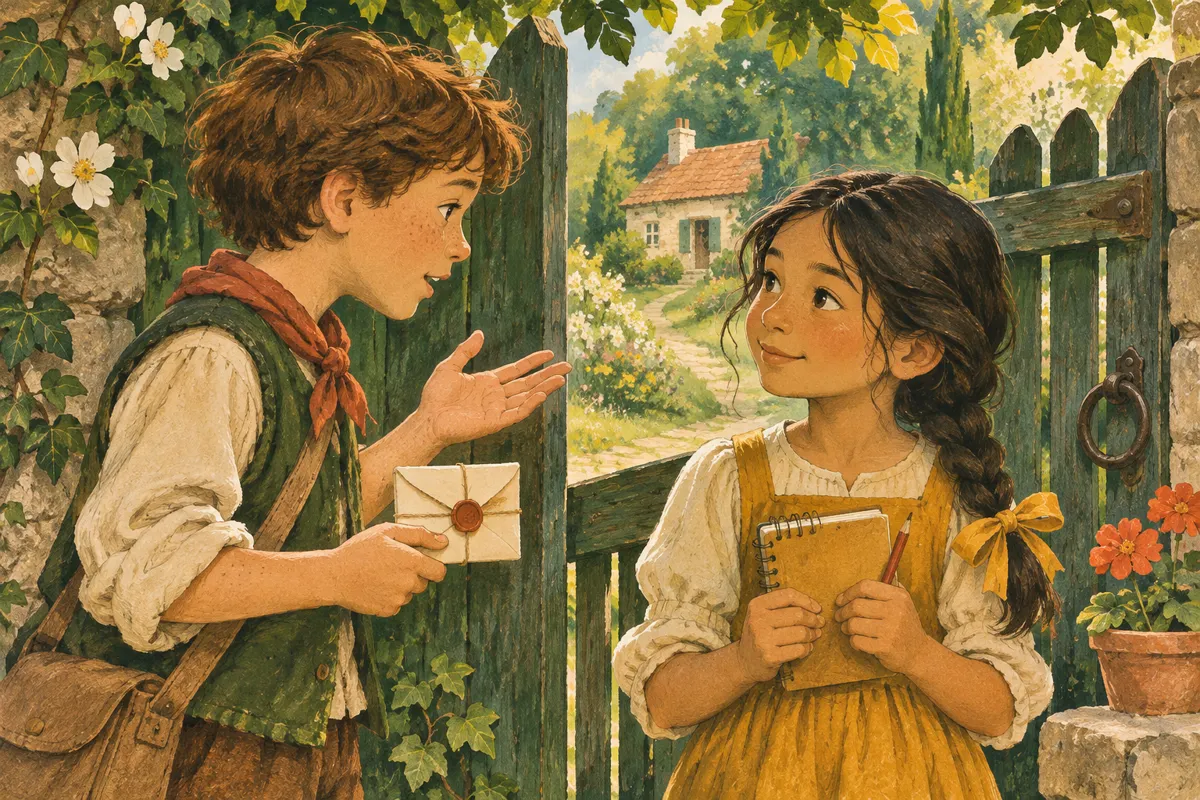
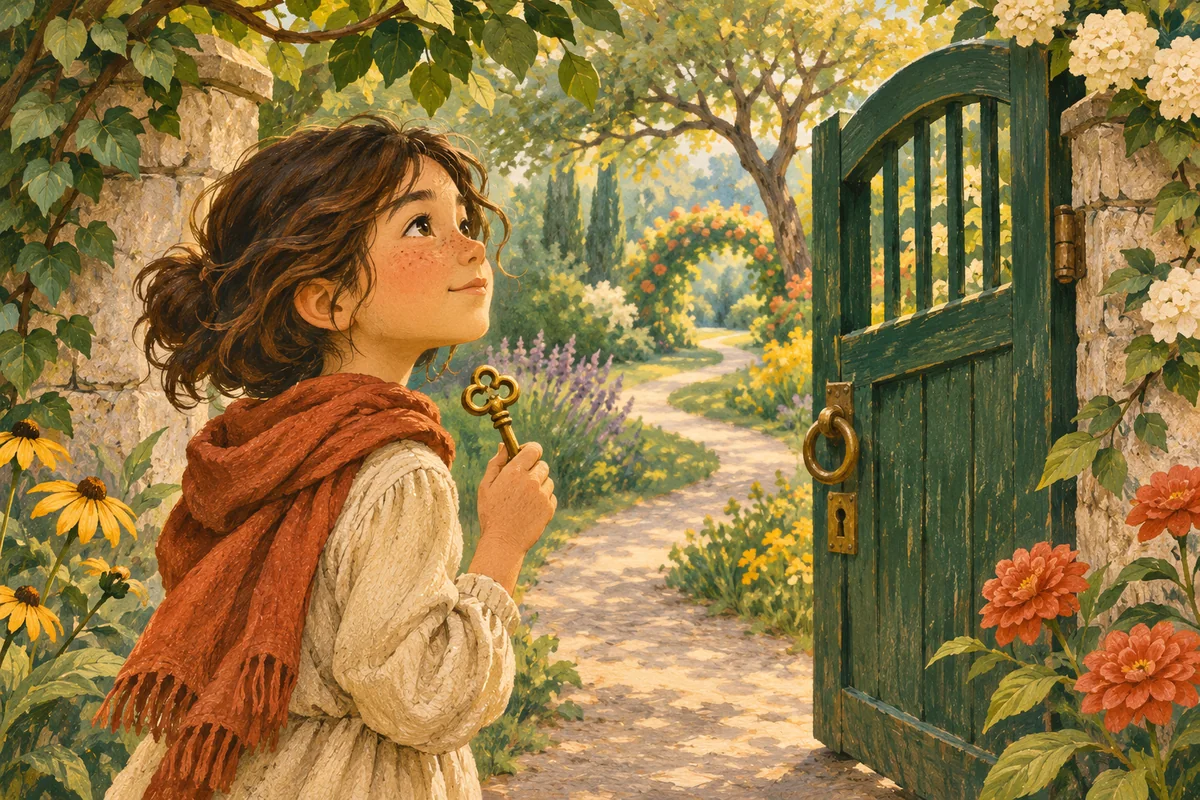
I reached the garden gate just as the clock struck six. My sister had asked me to wait outside, but the gate stood open. On the path lay her blue scarf. I picked it up and heard a voice from the greenhouse: “Please don’t move.”
Established facts: the narrator is outside a garden at six; the sister gave an instruction; the gate is open; her scarf is on the path; a voice comes from the greenhouse. The opening does not identify the speaker or explain the warning. Those gaps are opportunities, not permission to contradict the facts.
A possible continuation
I stopped with the scarf hanging from my hand. Through the glass I could see my sister crouching beside a tray. A small bird perched on its edge, one wing caught beneath a loop of twine. “It keeps pulling tighter,” she whispered. “Can I come closer?” I asked. She nodded. I eased the gate shut, stepped through the greenhouse door and laid the scarf on the bench.
The model keeps first person and past-tense narration. It answers who spoke and gives the warning a plausible cause. The narrator sees the sister before describing her position. The bird is a new invention that fits the opening; it was not something readers could already know.
Spot contradictions before adding twists
“I unlocked the closed gate” would conflict with the gate already standing open unless you explain that someone has since closed and locked it. “My brother shouted from the kitchen” is not automatically impossible, but it leaves the greenhouse warning unresolved and adds another person and place to manage.
A tense change inside dialogue is not automatically an error. In the model, “It keeps pulling tighter” is what the sister says at that moment, while the surrounding narration remains past tense. Judge the narrative timeline rather than mechanically changing every present-tense word.
Original exercises
1. What narrative person and main tense does the opening use?
Show answer and explanation
First person and past tense.
I is the narrator; reached, struck, stood, picked and heard place the narrated actions in the past.
2. Is the voice definitely the sister’s in the opening alone?
Show answer and explanation
No. The opening leaves the speaker unidentified.
The model chooses the sister as a plausible speaker. It supplies new information rather than retrieving an established fact.
3. Why is “I searched my bag for a key to open the locked gate” a continuity problem?
Show answer and explanation
The gate has already been described as open.
Without an intervening event, the new sentence contradicts the opening. A revision could instead have the narrator hesitate at the open gate.
4. Write the next two sentences after the model, keeping the same narrator and situation.
Show answer and explanation
Model: I asked her to hold the tray steady. With the loose end between my fingers, I began to unwind the twine.
The narrator acts on the established problem. Other plausible actions can work, but a sudden unrelated adventure would abandon the scene.
Review your continuation
Underline any new fact you invented. Check that it is compatible with the opening and that the narrator could know it. Then read only the last sentence of the opening and the first sentence of your response: they should connect. Finish at a deliberate point suited to the task, rather than assuming every continuation requires a cliffhanger or a complete resolution.
Write, compare, improve
Attempt the task on paper before revealing the model. Compare the choices rather than copying the wording. Underline one effective detail in your own response, identify one unclear sentence, then rewrite that sentence. Keep both versions so you can explain what changed. A different response can work equally well when it meets the instruction.
Return to the English learning hub and the creative-writing overview. Continue with story endings. For written-answer review, use the evidence lesson. The paper library includes an original English punctuation set with separate worked answers; it is supporting practice, not an automatic composition marker.
Teaching references checked on 3 November 2026: DfE English programme and CSSE sample writing criteria. These support attention to purpose, language and accuracy; they do not confirm a school’s 2027 paper. All passages and exercises here are original.
Ready to practise?
Choose original practice and use the answer explanations to decide what to work on next. These are not official school papers.
Keep reading
More guides relevant to this topic.